


![Sayed Gul Kalash opens up about the forced conversion of the Kalash community by the Muslims [ Chitral, Pakistan ]](https://projecthindukush.com/wp-content/uploads/2023-12-01_20h36_44.png)
![Sayed Gul Kalash opens up about the forced conversion of the Kalash community by the Muslims [ Chitral, Pakistan ]](https://projecthindukush.com/wp-content/uploads/2023-12-01_20h36_52.png)
![Sayed Gul Kalash opens up about the forced conversion of the Kalash community by the Muslims [ Chitral, Pakistan ]](https://projecthindukush.com/wp-content/uploads/WhatsApp-Image-2021-11-17-at-6.54.21-PM-6.jpeg)
[ Reported as seen ]
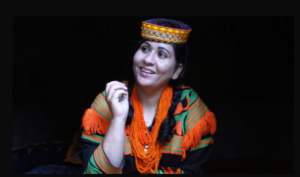
A community of people known as the Kalash live in Pakistan’s Chitral and Kalash valleys. Nestled within the Hindu Kush mountain range are the Kalasha Valleys, home to the peculiar Kalash people who have a unique language and culture.
Representing a religious minority group with strong links to animism, the Kalash people practise polytheistic pagan religion. Travellers from Pakistan and other countries are drawn to the Kalasha Valleys because of its rich cultural heritage. It is made up of three main valleys, the biggest of which is Bumburet (Mumuret), which is reachable from Ayun in the Kunar Valley by road. The other two, Rumbur, to the north of Bumburet, and Biriu (Birir), a minor valley in the Kunar Valley to the south of Bumburet, round up the trio.
A woman named Sayed Gul Kalash has come forth to talk about the forced conversion of the miniority community to Islam.
A community of people known as the Kalash live in Pakistan’s Chitral and Kalash valleys. Nestled within the Hindu Kush mountain range are the Kalasha Valleys, home to the peculiar Kalash people who have a unique language and culture.
Representing a religious minority group with strong links to animism, the Kalash people practise polytheistic pagan religion. Travellers from Pakistan and other countries are drawn to the Kalasha Valleys because of its rich cultural heritage. It is made up of three main valleys, the biggest of which is Bumburet (Mumuret), which is reachable from Ayun in the Kunar Valley by road. The other two, Rumbur, to the north of Bumburet, and Biriu (Birir), a minor valley in the Kunar Valley to the south of Bumburet, round up the trio.
In a podcast Gul says, “Let me give you an example of my office. When I was the head of the Chitral Museum, thousands of people used to come to me and guide me, saying that I was on the wrong path, that I should come to the right path, and that I should become a Muslim. They were all heads of departments, some were Haji Saheb. They used to say that I should become a Muslim.”
She further narrates instances where she felt hurt when people told hurtful things. She said, “This kind of thing used to happen to me every day. Whenever someone or other came to know that I was a non-Muslim, they were more interested in me than in my museum, saying, why don’t you convert? Why are you doing this? And I was very fed up with these things, and I am saying these things in front of you today for the first time; I have never done this before, and I want people to hear and understand this. I had to suffer due to these things; once it even happened, it was the day of Eid, and I gave leave to all my staff because they were Muslims; it was their festival. I said you guys celebrate Eid; I will do the duty; there was only one watchman with me, who was at the gate. A family came, which I thought was from Gujarat (in Pakistan). When they saw me in a Kalashi dress, they thought I was from Kalash. I guided them. The guy told me, give me every 30 minutes, and I will read Kalma to you and, I will go from here. I told him, Sir, it is the day of Eid, there is too much rush, this is my government duty, for God’s sake, please give me some time; I want to attend to these people, you come some other day to preach to me. So, I am ready to listen to your preaching. I have no issue, but today, I am on my official duty; please take care of this thing. He says no. His wife kept telling him not to bother her, she is busy, why should you bother her? He replied to her, she is on the wrong path, I have to show her the right path, or else, how will I face Allah? When he said this, I was furious. I told him, look, show Allah only the face that you have, if Allah asked me about my grave being different from yours, I will answer to Allah myself that this person came to me with this statement and I did not listen to him. If you stay here for more than five minutes, I will call the police. It would be better that you leave from here with your respect.”
She narrates yet another instance that occurred to her at work. She said, “Another time some people came to my office, they too were like some official people, some were of director level, some were from the department, some were from the museum, so when they came to the museum, I served them tea in my office. I called him to the office, and I served them tea as it is our custom, it is our culture. When I was serving them tea, I realised his interpretation of religion was so bad that I felt very sorry for it, that a person who is calling himself taleem-e-aftabi and is saying that he is from a very respected culture or religion or whatever, I did not expect such an interpretation from him, at least. He told me that some monkeys were kept in a zoo, and cold water was poured on those monkeys, so when they used to jump, cold water was poured on them. They soon realised they should not jump anymore, so they all sat down. He said that after that, it became a culture among them; every monkey that came inside would not jump because he was now afraid that they would pour cold water, so your culture is also such that someone has just made this up, and you are following it like monkeys. Imagine how bad I must have felt that I may not be able to call myself an educated person, but I can also call myself a student. Now I have done my post-graduation, I have travelled the world, and I have my experience with people. If I am not getting answers to such questions, imagine the girls who leave their homes after matriculation, the boys who leave their homes after their FA, and those who have not completed their education; how much impact would these things have had on them? The example given about the monkey, this thing hurt my heart a lot, it hurt me a lot.”
She further added, “Let me tell you something. I was very angry about what happened. The fact that you come to Kalash, you see that culture, you enjoy it, you don’t like it, please don’t come, don’t come, do you think that the people there do not get preached to? Don’t they read books? Don’t they know what Islam is, what Kalash is? So, if you bring your so-called preaching, then don’t bring it. And at least don’t go to someone’s office and do it. It is better you don’t do it because I also read books, I also know this, and we Kalash people have a wonderful belief system, we say that if all this is written in our destiny, then it will automatically happen to us, there is no need to make an extra effort to achieve it. If it is written in my destiny to be a Muslim, then I will become that I don’t need your preaching; no one preached to my sister; she became a Muslim because it was in her destiny. We believe a lot in destiny, but these people, when they come to your office and say such things to you during your official working hours, then think what is the condition of others.”
Following this, the host, Imran, brought up the topic of how minorities in Pakistan name their children such that no one identifies them as a minority instantly. He said, “Actually, I have seen people working with their Hindu friends and Christian friends. There are people in the cities who go through this problem every day, and some people even now. I am noticing one thing that those who are Christian or Hindu or the atheists here, name their children in such a way so that no one doubts that the name is from another religion.”
Sayed Gul Kalash replied as to why she kept her name so. She said, “When I completed college, I came out of my world because I had done my entire education in Chitral, then when I left Chitral for the university. Many people had advised me that I should not tell anyone that I am a Kalash because people do not consider this as a good thing, and they will harass me. That day, I decided to make Kalash a brand with my name, and today, I am telling everyone about it. I tell you that I am Gul Kalash; no one likes me, they can go to hell, but this is my identity.”
She was then asked if people still preach to the Kalash people since it had been banned. Gul replies, “There is a ban, there was a ban earlier too when my officers would say things like that, there was a ban, the way it used to be earlier was that they would do door-to-door preaching, it is not like that now, it has stopped. But there are people like those who come to the office and send me a message while having tea, they don’t throw stones but send messages – the messages are beautifully worded, but it does pierce your heart, that is there, that is indirect preaching; that keeps happening, and no one can stop it.”
When questioned why their community’s population is so low, they stated that it was 22000 at one point but has since dropped dramatically to 3000. Gul says, is, “Actually, I think it was 22000 when they had their own rule when they lived in a vast area. But after the 14th century, they never increased that much, the population kept increasing and decreasing over and over again, but the reason for this is this, Imran, let me tell you one thing, in any religion or any culture, if no one else is converting into it, then it does not grow so much. If you say a religion is growing, then it means that people are converting to it. In our Kalash religion, there is no preaching. We do not do it, it is not our culture. Our religion itself does not allow us to do preaching and conversion because we believe that every person who does good work will go to heaven. There is no need to bring someone into our religion by preaching. We call it Karma. Your good deeds will show you good, and your bad deeds will take you towards bad, so there is no preaching or missionary work in our religion, we say that we all human beings are God’s creation, and God makes anyone as he wants and it is our destiny that if I was born in Kalash then God wanted me to be born in Kalash otherwise what was the difficulty for him to make me be born in a Muslim family, it was not difficult for Him nor do we believe that if a person is born in any religion, his deeds should be good, that person should be good, heaven and hell depend on his deeds, no religion, no matter which religion you pick up and study, does not teach you bad things. We humans are the ones who bring bad name to religion because of wrong interpretation.”
It is time to acknowledge who is the real victim.


